Giorgi Tumasyan’s Journey
Influence
In the autumn of 2023, accumulated experience and personal trials had changed the direction of my public work. For me, the struggle for Armenia’s security and Georgia’s democratic future was increasingly bound to one question: how to turn society’s will and knowledge into functioning state institutions. My expanding participation in Armenian public life and the continuing civic confrontation in Georgia became two interconnected strands of my work around that question.
Guided solely by the desire to help my nation, I entered the Armenian sphere of analysis and information. At first, this meant individual expert commentaries and interviews. Gradually, however, I moved from analysing current events to studying the systemic causes underlying Armenia’s crisis.
In December 2023, we felt the first relief: the European Union granted Georgia official candidate status for EU membership. For me, this was also an important result of uncompromising civic resistance. After the withdrawal of the bill during the March struggle, this decision gave us renewed hope that the country’s European path could be defended and strengthened.
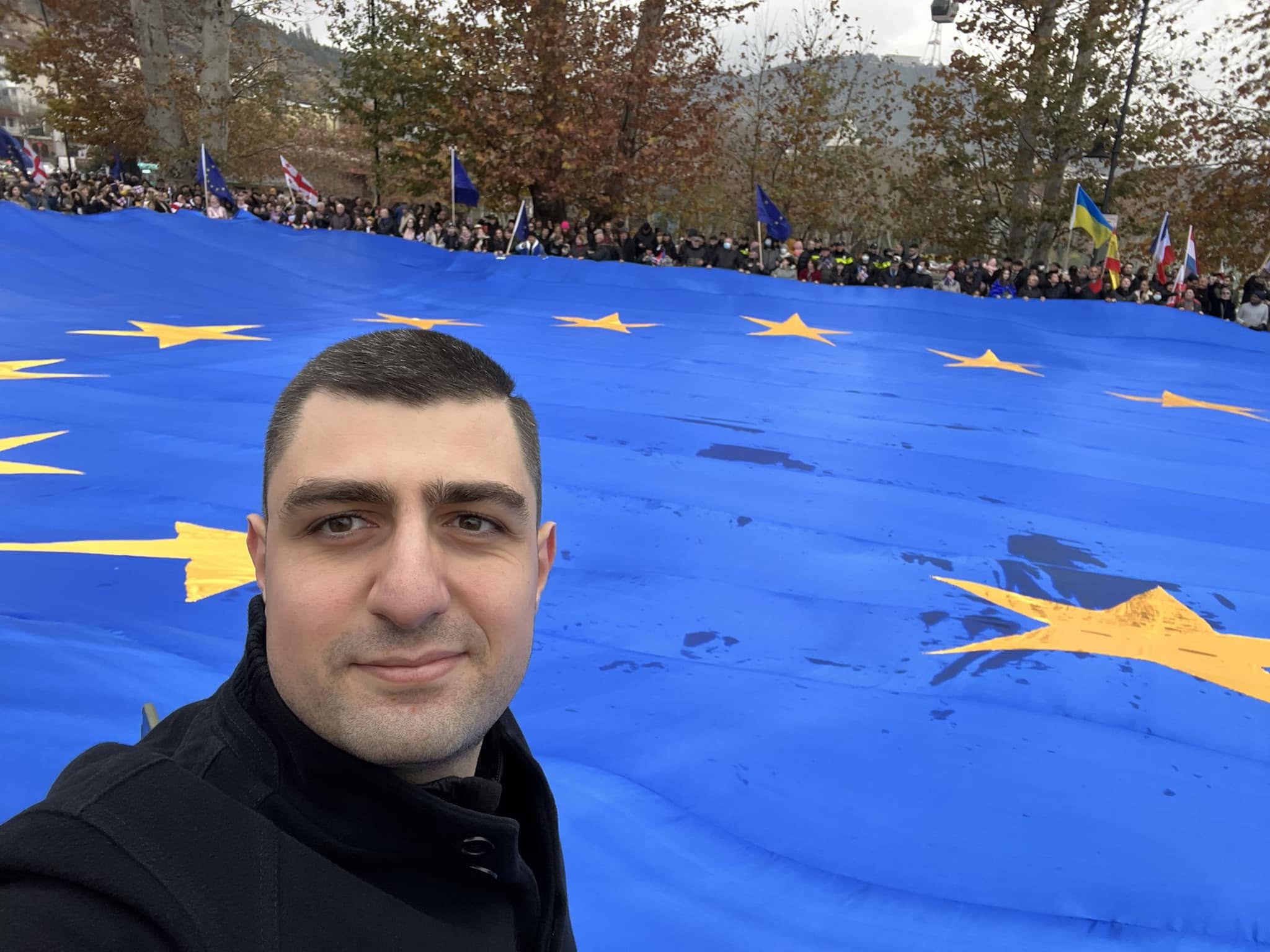
Yet in March 2024, the danger we had fought the previous March returned. The authorities reintroduced the ‘foreign agents’ bill, showing that its earlier withdrawal had not led to a change of political course. We found ourselves on the streets again. This time, the system acted with cold-blooded brutality: repressive laws were pushed through Parliament, and the pressure escalated into persecution of individuals. Protest leaders, myself included, were inundated with telephone threats of physical violence. The security agencies under the authorities’ control remained inactive while illegal gangs carried out coordinated attacks right outside our homes, and an administrative assembly line of fines and court proceedings sought to paralyse our resistance.
This time, the resistance could not prevent the law’s adoption. In my assessment, this demonstrated a dangerous consequence of the consolidation of authoritarian power: when the authorities concentrate coercive, administrative, and judicial levers in their hands and limit independent oversight of them, even large-scale civic protest may no longer change their decisions. In 2023, public pressure had still forced the authorities to retreat. In 2024, a more entrenched system was able to pass the same initiative, withstand public protest, and suppress its participants. For me, this difference underscored the danger of allowing the concentration of power to reach the point at which society loses the ability to influence state decisions peacefully.
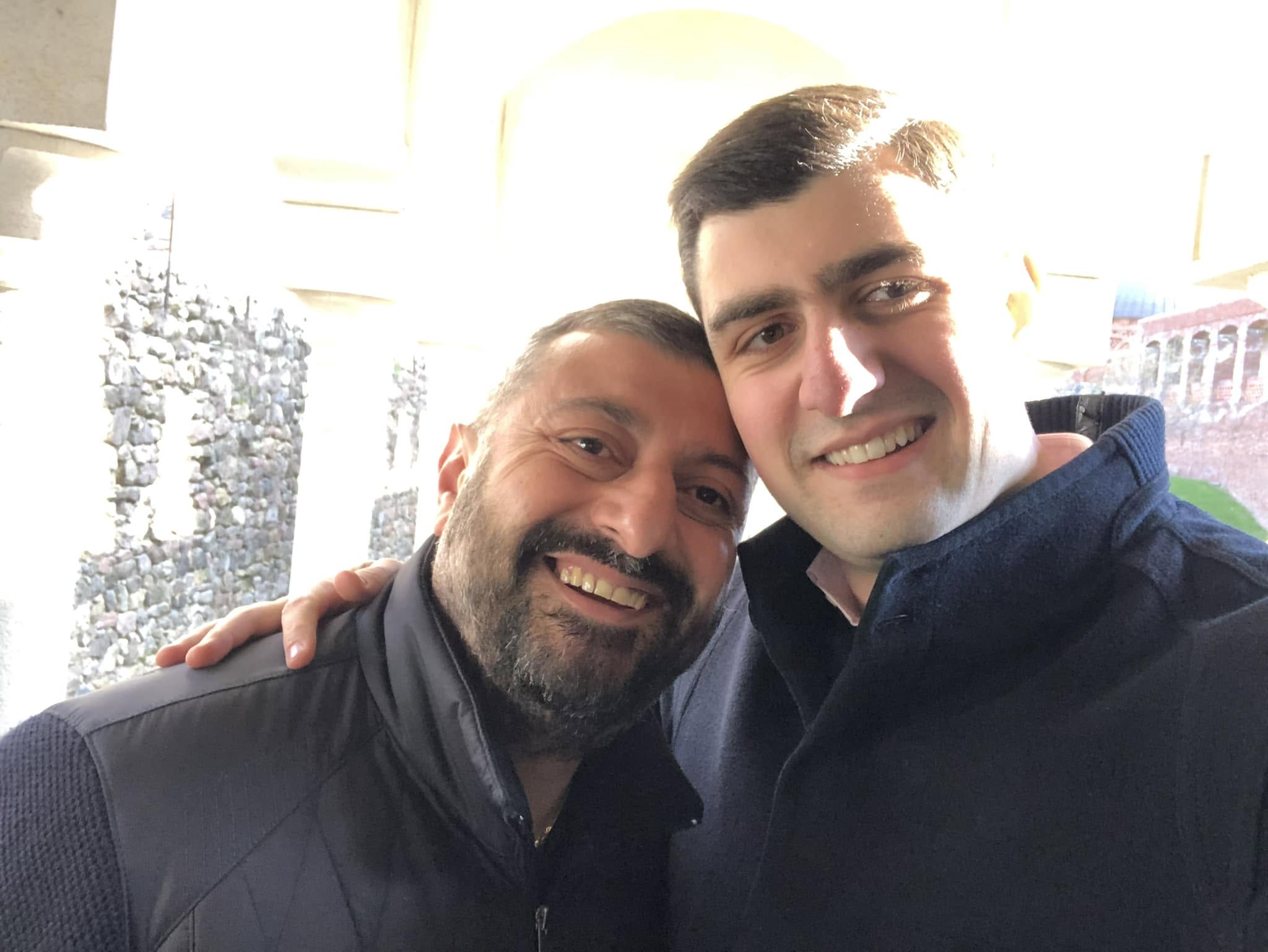
On 11 September 2024, my father passed away. The world lost all meaning for me. The black autumn of 2024 became a period of absolute existential emptiness. My father left me his central charge: to continue our shared path and stand up for Armenia. Fulfilling my father’s testament became my reason to go on living.
At the united opposition’s final mass rally before Georgia’s parliamentary elections of 26 October 2024, I addressed tens of thousands of citizens gathered in Tbilisi’s Freedom Square, speaking in Georgian and Armenian. I do not know when, or by whom, a speech in Armenian had last been delivered in that square. For me, the speech was an important symbol: an opportunity to make the Armenian community’s voice heard in Georgia’s shared civic struggle. I openly called on society, and especially Georgia’s Armenian community, to vote for democratic forces, knowing that the democratic futures of Georgia and Armenia are inseparably linked.
After the 26 October elections, according to the official final results, the ruling ‘Georgian Dream’ received around 54% of the vote, while all the other parties together received around 46%. International and local observers recorded violations, pressure on voters, and problems with ballot secrecy. All four opposition forces disputed the credibility of the results and refused to recognise them.
My speech and call to participate in the elections expressed the conviction that the Armenian community must help shape the country’s shared future through its voice and its responsibility. But the crisis surrounding the elections also demonstrated another consequence of the consolidation of authoritarian power: the concentration of state levers in the hands of the ruling force undermines the electoral process itself. When pressure on voters becomes possible, and the free expression of their will and ballot secrecy are insufficiently protected, elections lose their ability to ensure public oversight of those in power. In my assessment, the suppression of street protest and the undermining of the electoral process in Georgia were interconnected manifestations of the same concentration of power.
The post-election crisis entered a new phase on 28 November 2024, following the Georgian Dream party’s official announcement that it was suspending the European integration process. A new, unprecedented wave of popular protest swept the country. I found myself at the very centre of that struggle, becoming one of the leaders of the ‘Unity’ civic movement. In the months that followed, I had to endure the full severity of the state’s apparatus of repression: brutal dispersals, blasts from water cannons in the cold of night, tear gas, and four successive court proceedings against me within a single year. Freedom and sovereignty are never granted forever: every generation must defend them personally, paying the price in its own safety as well.
Videos
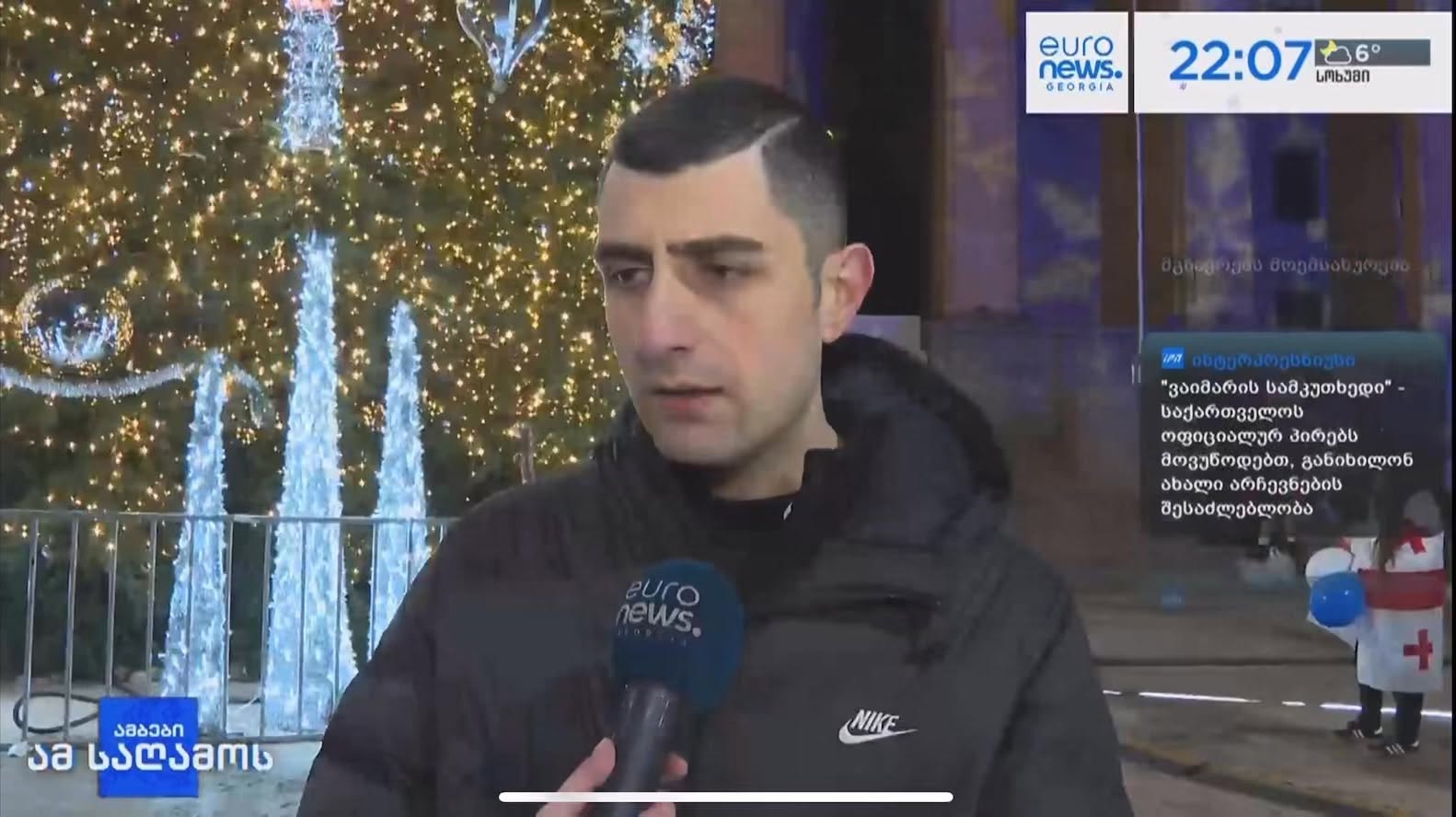
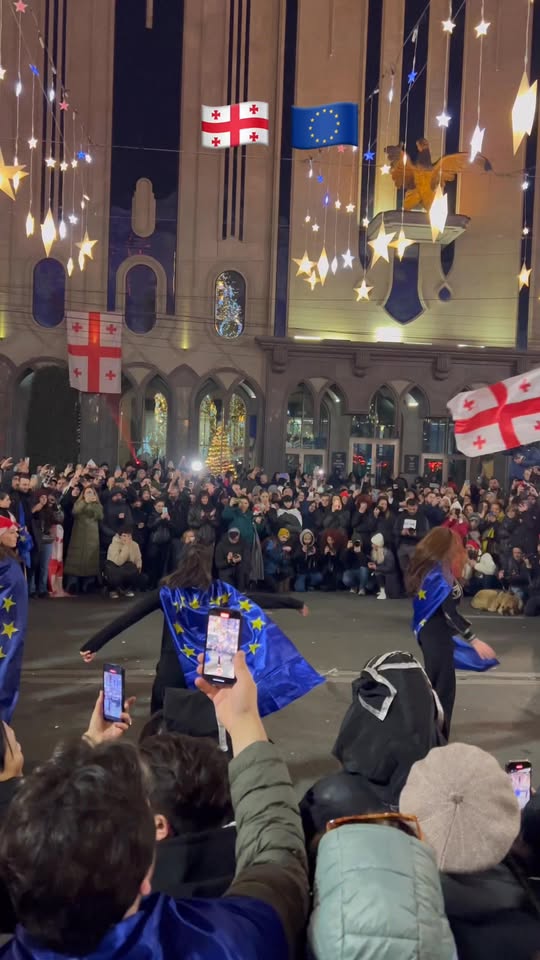
In 2019, I had been one of the participants in that struggle. Now, as one of the movement’s leaders, I also saw more clearly the responsibility of leadership. Resistance was not simply a matter of displaying one’s own resolve: it required thinking about people’s safety, the possibilities for continuing the struggle, and the next steps. For me, the task of turning a shared will into sustained, organised work became increasingly important alongside the task of rallying people.
At the same time, I decided to create my own independent analytical platform. Appearing as an invited guest on other broadcasters, I inevitably encountered the boundaries of journalistic formats and the editorial policies of particular media groups. Initially, it was an Armenian-language project of my own on YouTube, devoted to national security. Public demand was enormous: people were tired of cheap partisan propaganda. They needed a deep explanation of root causes and, above all, a clear outline of the future.
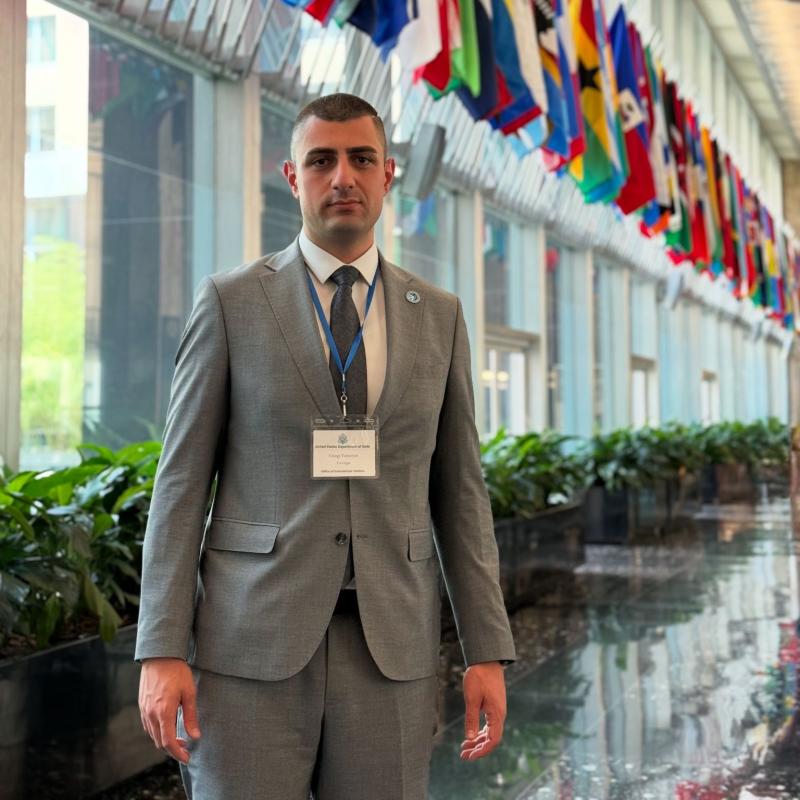
In 2025, my work received recognition at the highest international level. In August 2025, the US Department of State recognised me as a ‘promising leader’, inviting me to Washington in the United States. The visit coincided with decisive historic events: the signing of a joint declaration in Washington on 8 August 2025, and the initialling of the agreement on the establishment of peace and interstate relations between Armenia and Azerbaijan. The purpose of my visit was to establish direct strategic connections with American political and expert circles. In 2025, I joined the Brussels-based EU Awareness Centre think tank as a researcher.
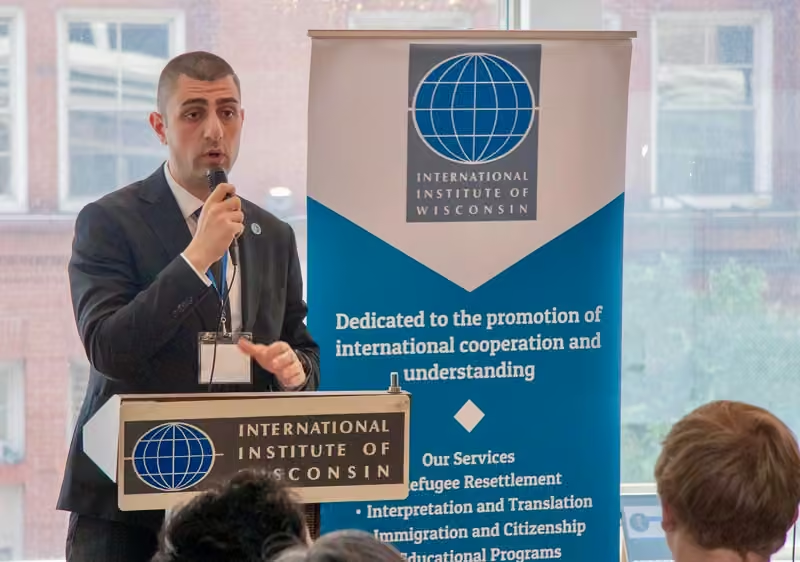
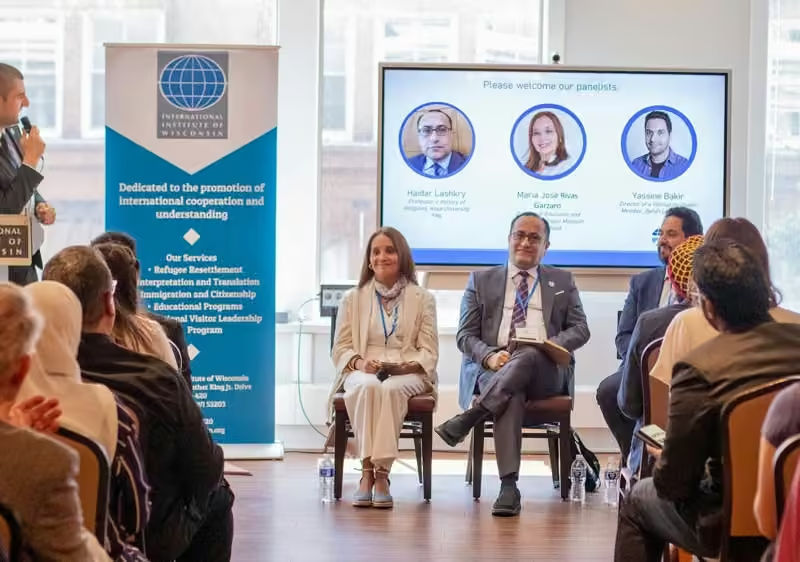
In Georgia itself, in 2025, I became a co-initiator of the ‘Georgia First’ political movement. During that period, my participation in Georgia’s political and media life expanded significantly. For me, this was also an opportunity to increase the Armenian community’s visibility and its participation in shaping the country’s public agenda.
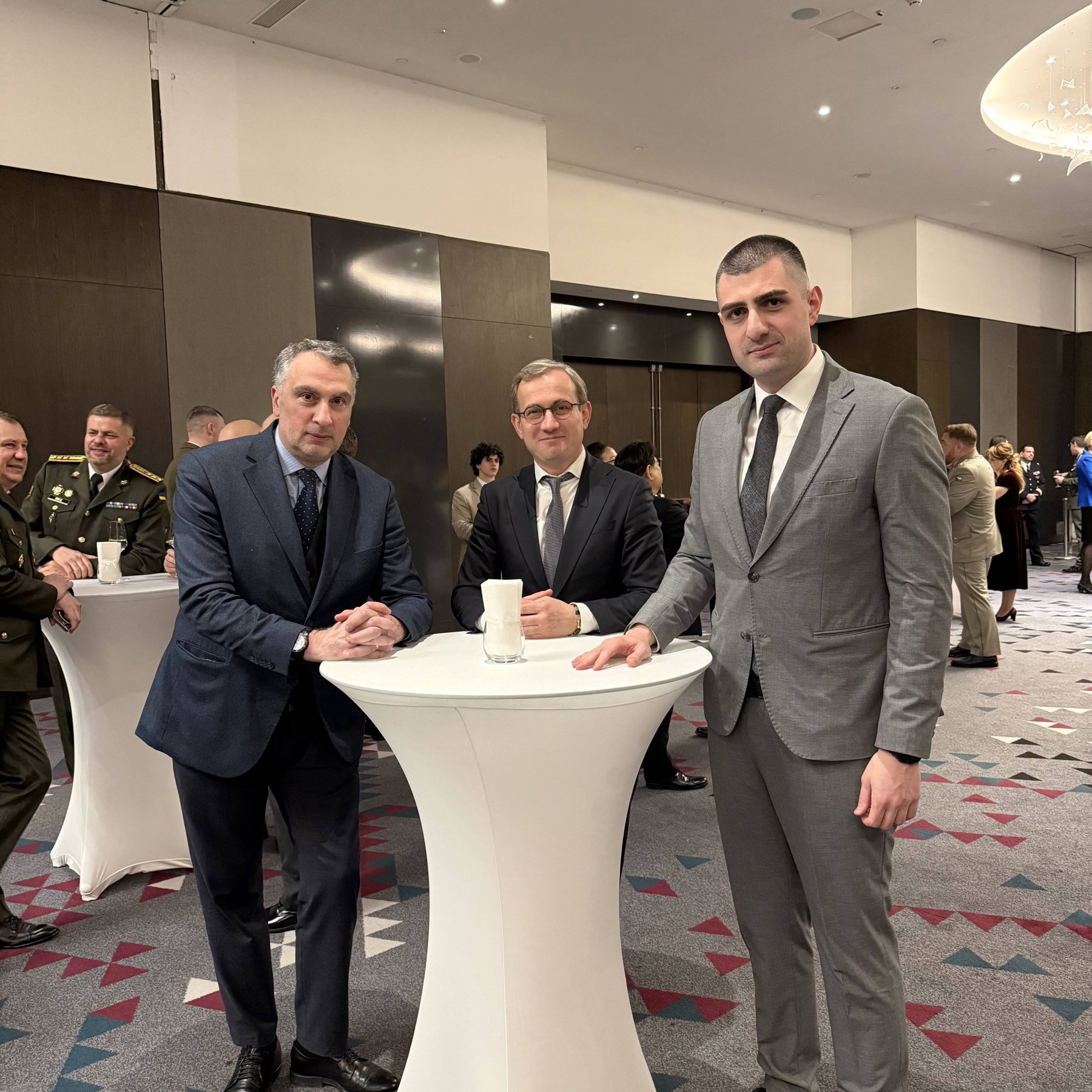
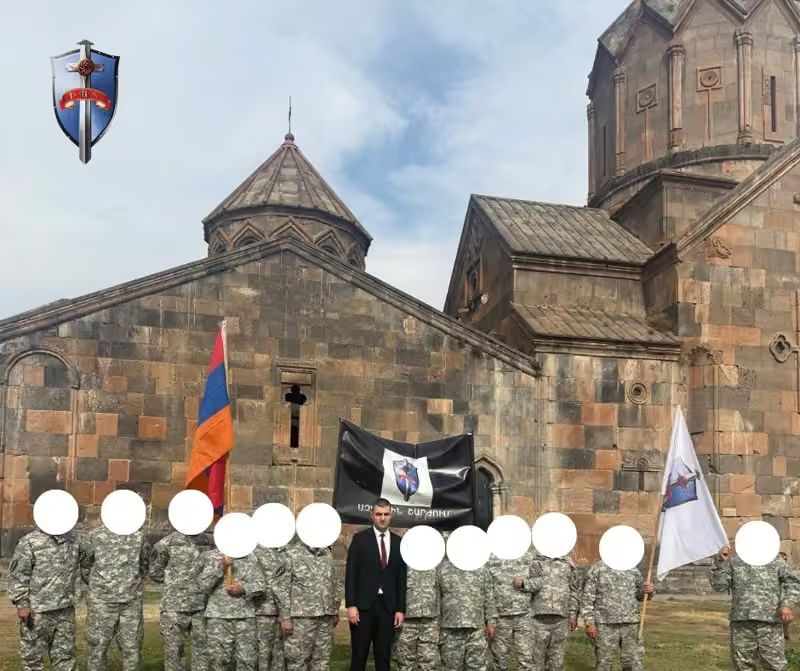
At the end of 2025, during the gravest institutional and spiritual confrontation surrounding the Armenian Apostolic Church, I took a principled civic step. On three separate occasions, I travelled from Tbilisi to Armenia specifically to attend liturgies in Hovhannavank, Talin, and Khachik. They were celebrated by clergy devoted to Armenia who had stood against the establishment’s hierarchy and had been defrocked by Ktrich Nersisyan. In those most acute and difficult days, I publicly stood beside Prime Minister Pashinyan: for an independent and sovereign Armenia, for an Armenian Apostolic Church free from external control, and for victory in the struggle for justice that my father and I had begun back in 2018.
For me, this confrontation was also a return to the unresolved questions of 2018–2019. From the perspective of long-term state-building, I regarded the earlier decision to postpone reform of the spiritual institution as a profound miscalculation. In my assessment, those unresolved problems had contributed to the deepening of the crisis in 2025–2026.
I openly and consistently supported Prime Minister Pashinyan’s course towards strengthening Armenia’s state sovereignty and implementing the Washington agreements in practice. In the context of the momentous parliamentary elections of 7 June 2026, I publicly voiced my support for Prime Minister Pashinyan, calling on citizens of the Republic of Armenia who trusted me to vote for the ‘Civil Contract’ party.
By mid-2026, my YouTube platform had grown into a fully fledged multilingual media network broadcasting programmes in Armenian, Georgian, Russian, and English. During that period, Armenian, Georgian, Azerbaijani, and international media began regularly inviting me for interviews and analytical discussions. My influence in the South Caucasus became cross-border, and such a broad reach always entails great responsibility.
In the summer of 2026, as the ‘Georgia First’ civic initiative approached formal registration as a political party, I made a considered strategic decision to remain outside the party’s internal hierarchy and retain the status of an independent, non-party adviser. I soberly assessed the institutional environment and understood that the status of a party politician would limit my freedom to act. Independence of principle, autonomy, and complete freedom of action were incomparably more valuable than any party position.
This entire journey clarified the purpose of my public work: discussion of Armenia’s future must be carried forward into a practical project for the state’s development. Street struggle, community work, and international experience had brought me, from different directions, to the same question: how to turn an opportunity gained into lasting state strength. That question had confronted me with particular urgency in Yerevan on 7 June 2026.