Giorgi Tumasyan’s Journey
Scale
In 2017, my work moved decisively beyond community service and civic initiatives. For the first time, I received a mandate to represent not an individual organisation, nor even our community, but an entire state.
This breakthrough was no stroke of luck. Behind it stood years of exhausting work and tests of resolve. In 2015 and 2016, I went through the nationwide selection process twice, on both occasions finishing second, one step short of victory. For many, that would have been a reason to leave the race and sink into disappointment. But my father had raised me differently. Together, we turned the experience of those two setbacks into a precise mathematical calculation. In 2017, I won first place in the open competition organised by the Georgian government and was selected as Georgia’s Youth Representative to the United Nations.
It was more than a personal victory. For the first time in the country’s history, a member of an ethnic minority, an ethnic Armenian, earned the right to speak on behalf of all Georgia’s young people on the planet’s foremost diplomatic platforms. I fulfilled the promise I had made to myself. But unlike in 2014, this time I was travelling to New York as a representative of the state, rather than as a student. This experience allowed me to analyse the international system from within with surgical precision, moving permanently beyond the theoretical framework of university lectures.
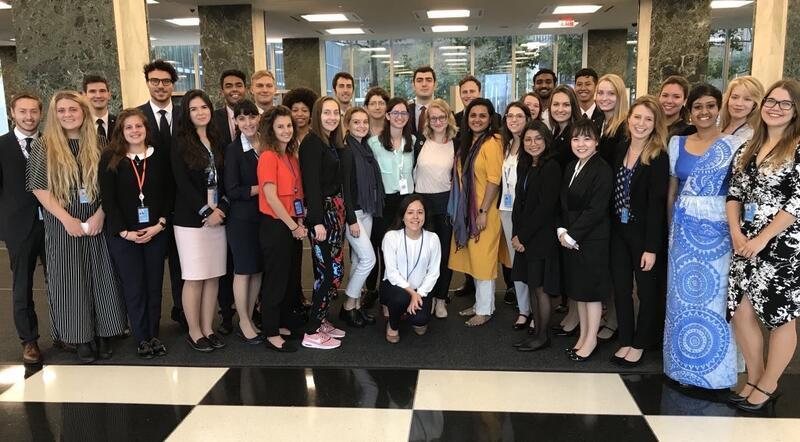
Before travelling to New York to participate in the United Nations General Assembly, in the summer of 2017, I undertook an extensive nationwide tour, meeting young people across Georgia’s regions and in its capital. I travelled throughout the country, listening to and bringing together the aspirations of the new generation in Kvemo Kartli, Samtskhe-Javakheti, Kakheti, Shida Kartli, Mtskheta-Mtianeti, Imereti, Racha-Lechkhumi and Lower Svaneti, Guria, Samegrelo and Upper Svaneti, Adjara, and, of course, the capital, Tbilisi. It was fundamental to me to overcome internal divisions and establish direct dialogue with young people from different communities: Kartvelians (Georgians), Armenians, Azerbaijanis, Jews, Ossetians, Abkhaz, Kists, Kurds, Yazidis, Greeks, and others.
My position on the international stage rested not on reports written behind desks, but on the living voice of a generation. During those intensive field meetings, from major urban centres to the most remote mountain and border villages, I was able to draw a real map of the challenges young people faced. The tour gave my mandate profound practical substance, transforming my subsequent speech at the United Nations into a collective manifesto for all the country’s young people.
In the years that followed, I had the opportunity to speak on the main United Nations platforms in New York and Geneva and to engage directly with senior diplomats, heads of government departments, and the architects of global politics. My first speech from that platform in New York, in 2017, was imbued with sincere faith in global solutions. Addressing the General Assembly’s Third Committee, I spoke enthusiastically about the need for widespread investment in education; technological progress that, through automation, would free humanity from monotonous work and direct our efforts towards the development of civilisation; and the use of the UN Sustainable Development Goals as a tool of public oversight over governments acting solely in narrow national interests.
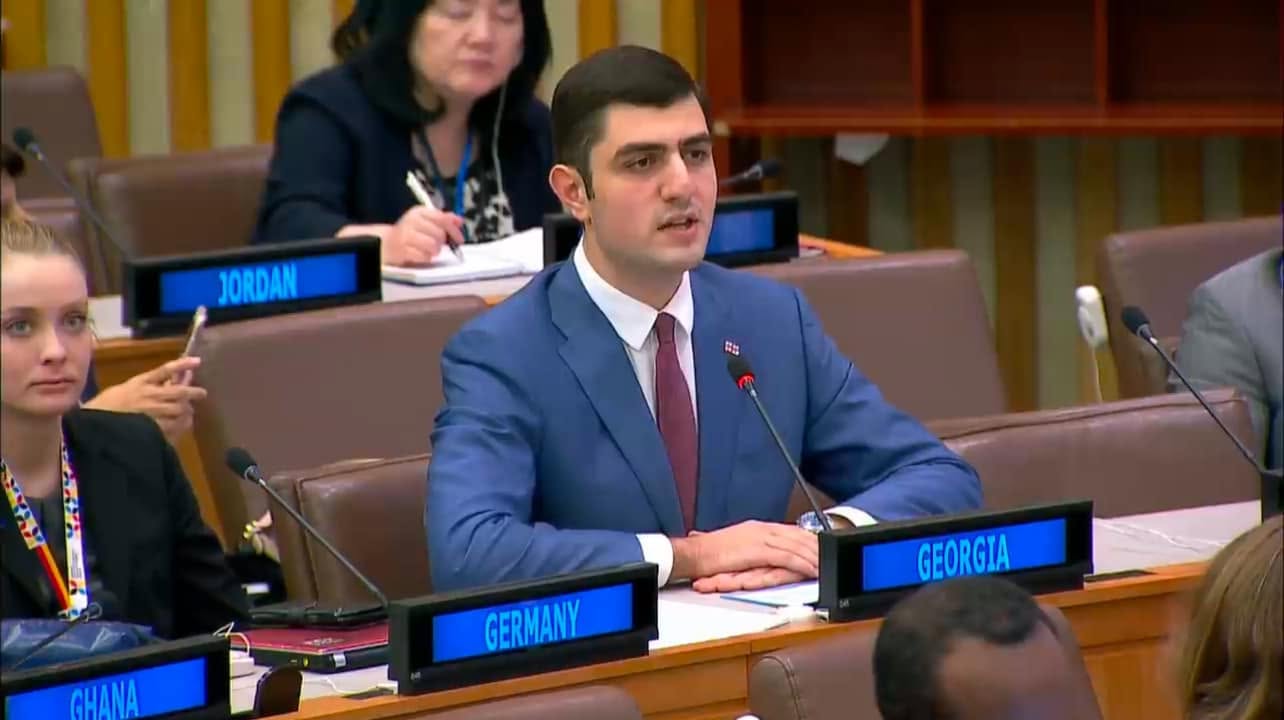
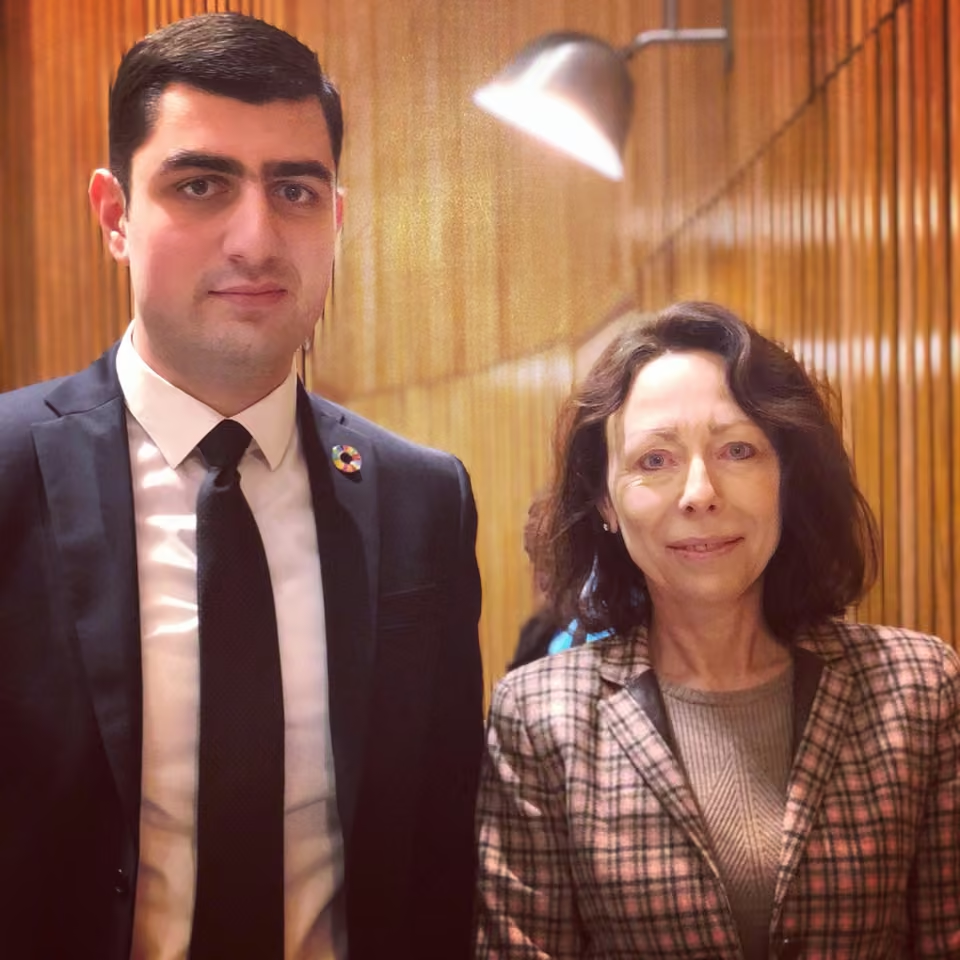
Yet alongside these universal declarations, in the second part of my New York speech I turned to the most urgent and painful subject: the reality in which Georgia lives. I openly identified the forced exclusion of a significant portion of our citizens from the development agenda as a principal challenge. These are the people living in the regions of Georgia occupied by Russia. From the United Nations platform, I addressed our Abkhaz and Ossetian brothers and sisters beyond the occupation line directly, without political manipulation and with deep respect. I spoke of our sincere concern for their future, their socioeconomic development, and the preservation of distinctive Abkhaz and Ossetian cultures, traditions, and languages. I emphasised that Georgia was ready and eager to share all the benefits of development with them, as was already happening through free access to advanced medical care.
I expressed the hope that one day, here at United Nations Headquarters, beside the historic fragment of the demolished Berlin Wall, there would be a piece of barbed wire, taken from the very wire Russia had stretched across our land to artificially divide age-old brothers: Georgians, Abkhaz, and Ossetians. My appeal to the new generation was simple: break this vicious cycle of pain, leave behind the heavy legacy of past conflicts, and extend a hand to one another for a shared future. I concluded my speech with a line from The Knight in the Panther’s Skin by the great Georgian poet Shota Rustaveli: ‘Good, having defeated evil, will remain in this world forever.’
But at the very peak of this idealism about values, I found myself inside the merciless machine that shapes the global agenda, and the harsh awakening came instantly. The representative of the Russian Federation immediately took the floor. In an icy tone, he expressed ‘regret’ that the United Nations youth platform was being used for ‘political score-settling’ and ‘unfriendly’ statements by Georgia and Ukraine, accusing us of undermining the constructive atmosphere.
In that instant, I went from peacebuilder to hard-edged diplomat and immediately demanded the right of reply. Rising from my seat, I launched an uncompromising diplomatic counteroffensive, directly accusing Russia of continuously violating my country’s sovereignty, the UN Charter, the principles of international law, and the ceasefire agreement of 12 August 2008. In the meeting hall, I spoke of Russian military aggression, the ethnic cleansing of the Georgian population, and the illegal occupation of approximately 20% of Georgia’s territory, presenting them as continuing violations of my country’s sovereignty and its citizens’ rights. I directly demanded that Moscow stop disregarding its international obligations and allow hundreds of thousands of refugees and internally displaced people to return to their homes safely and with dignity.
In that moment, an outdated imperial stereotype was collapsing. A member of an ethnic minority, an Armenian living in Georgia, demonstrated absolute devotion to his state, Georgia, at the highest international level, defending its sovereignty in a fierce confrontation on the planet’s principal platform. For me, that speech was an expression of civic responsibility: my Armenian identity and my dedication to Georgia’s sovereignty complemented one another.
This heated diplomatic clash over my speech laid bare the true mechanics of world politics. The reality was cynical: behind every line of a resolution lies the cold self-interest of states; behind every humanitarian declaration, a hard mathematical calculation of the balance of power.
It was at the United Nations that I grasped a fundamental pattern that transformed my worldview: international institutions can mediate between conflicting parties, encourage dialogue, and coordinate humanitarian assistance. But international institutions cannot replace a sovereign state. No international convention can replace a combat-ready army. No supranational committee can compensate for paralysis in a country’s own executive authority. No declaration will protect the borders of a country whose leadership blindly believes in the power of foreign guarantees.
I received final confirmation of the old European order’s blindness a little later, in August 2018, during German Chancellor Angela Merkel’s official visit to Georgia. At an open meeting broadcast live, I asked her a direct question, without polite formalities. I openly told the leader of a major European power that the anti-democratic forces of Russia and Turkey were deliberately preparing to bring the South Caucasus under their complete control and divide the region between them, recalling the fate of my ancestors, caught in a similar partition in 1920.
I asked her what the European Union was prepared to do in this situation to offer a real alternative. No clear, specific answer about concrete action was given at the time, only the standard collection of general diplomatic phrases. The West preferred to remain in its comfort zone, lulled by the illusion that the old rules of the game still applied. It was in this intellectually unprepared, paralysed condition that the European Union later encountered the new reality in the South Caucasus. The dark prediction I had expressed to Merkel came true with frightening mathematical precision: the region’s balance of power soon changed through the brute force of Moscow and Ankara, while Brussels expressed yet another ‘deep concern’.
Alongside this work, I successfully passed the state qualification examinations and was formally included in the Diplomatic Reserve of Georgia’s Ministry of Foreign Affairs, which allowed me to examine the inner workings of foreign policy in detail. During this same period, the European Union selected me as a Young European Ambassador, and the World Economic Forum in Davos included me in its global community of leaders.
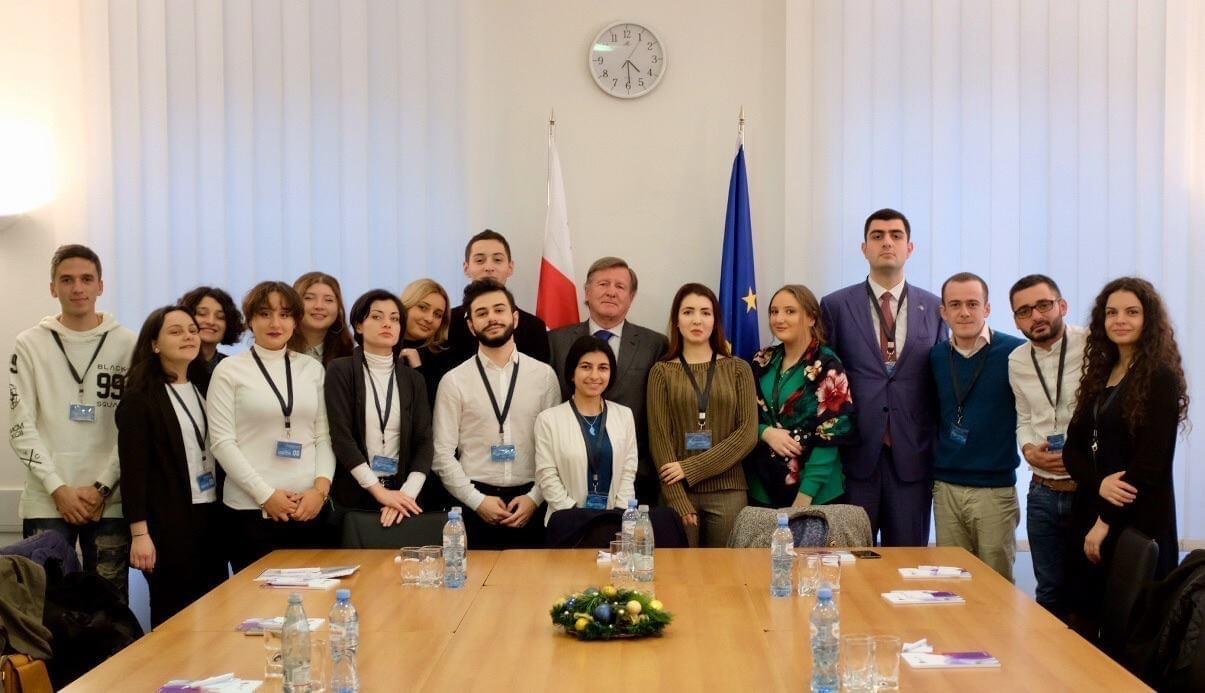
Participating in the Council of Europe’s World Forum for Democracy in Strasbourg in 2017 allowed me to state on an international platform that a confrontation between democracies and dictatorships was approaching, and that an alliance of dictatorships was preparing war against democratic states.
In January 2018, during my second official visit to the United States, I decided to move beyond the standard protocols of the East Coast. On my own initiative, I travelled to California, to Silicon Valley and Los Angeles, to study the potential and patterns of thinking of the Armenian-American community in depth. There, I saw Armenians working at the forefront of global technological thought. In them, I saw the potential of knowledge, creativity, and professional discipline on which our Impregnable Armenian Civilisation could be built.
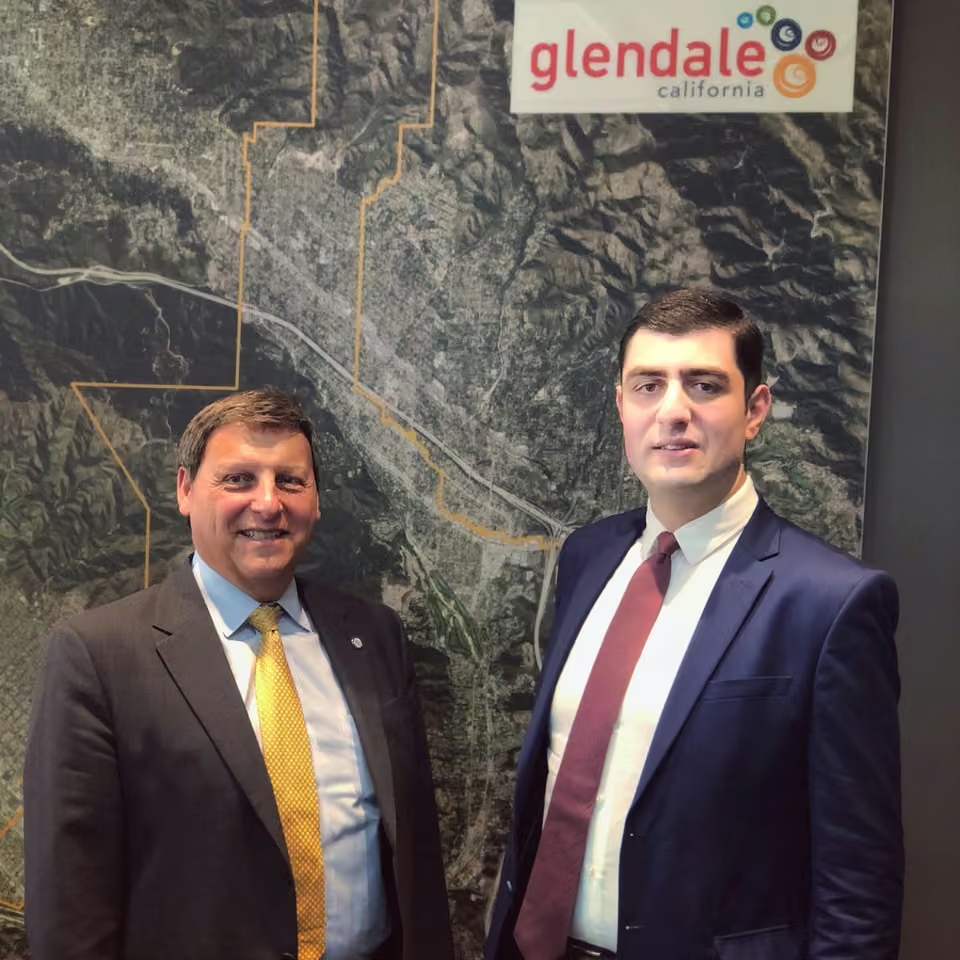
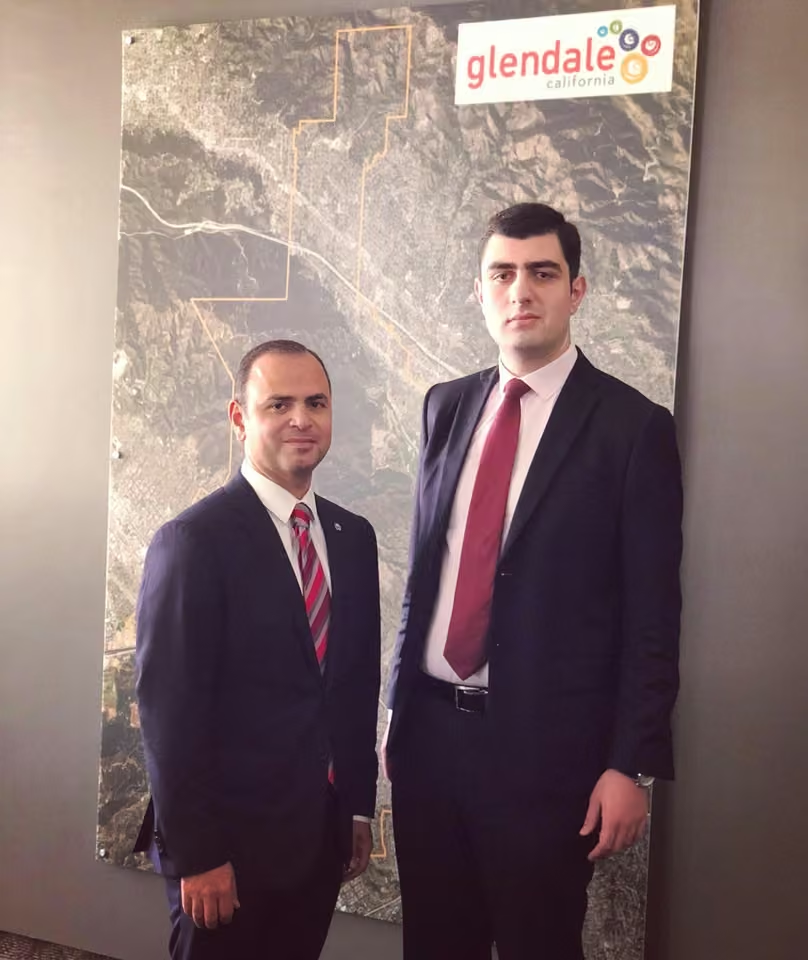
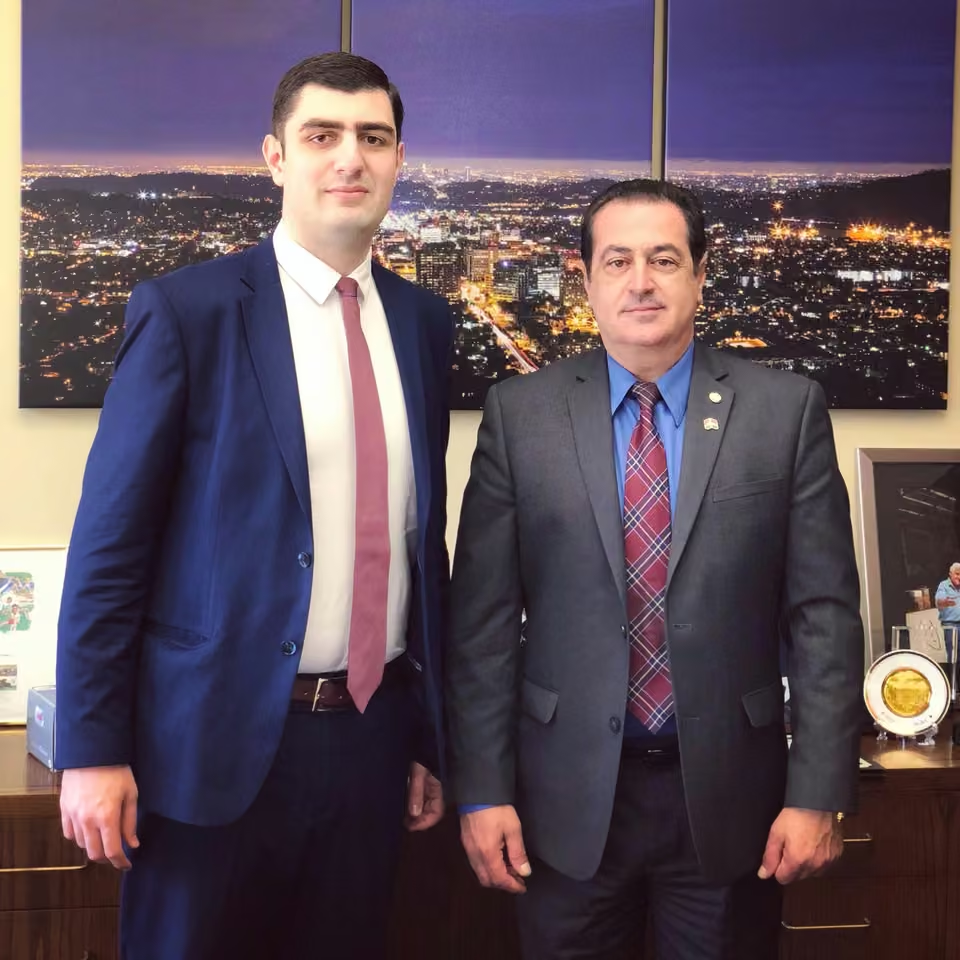
At the same time, however, this triumphant journey exposed a sinister ‘Paradox of Appropriation’: their immense scale was not serving the Armenian system, their patents were strengthening foreign economies, and their taxes were sustaining foreign armies. I saw how great the Armenian professional potential created across the world was, and how weak the mechanisms connecting it to Armenia’s state development were. That mismatch became a systemic problem in my eyes.
Every new international platform broadened the contours of my strategic vision. Most importantly, I gained access to the governing code of successful states.
Nations seeking to preserve their sovereignty do not confine themselves to explaining their internal failures through external factors, nor do they build their politics solely around searching for someone to blame.
They consistently improve the operation of their own state apparatus, investing broadly in education, technology, defence, and human capital. My focus shifted decisively from international diplomacy to the internal design of state strength.
Throughout all the years that followed, whatever expert networks and international projects I joined, I invariably returned to the same fundamental truth: ultimately, every people’s destiny is determined at home. This experience formed my central conviction: Armenia’s future cannot be entrusted to the goodwill of superpowers. Our principal support must be the quality of the Armenian state, the strength of its institutions, and society’s willingness to take responsibility for its own destiny.