Giorgi Tumasyan’s Journey
Blow
2017 broadened the scope of my work and my international recognition, but that same year also marked the beginning of a period of severe trials. The blows that followed, through the autumn of 2023, tested both my understanding of the world and my personal resilience. Conflicts that began within state and community institutions continued in the struggle on the streets, while the disasters that befell Armenia turned the pain of our family history into a present reality. Throughout these years, I had to test my knowledge and convictions in the face of real confrontation.
The first blow was struck from behind, from a direction I did not expect at that moment: the political environment then prevailing in Georgia, which immediately tried to devour my independence. It happened in June 2017, as soon as I received my mandate as Georgia’s Youth Representative to the United Nations. A system accustomed, in effect, to seeing only obedient executors encountered a person whose thinking had been shaped by an entirely different set of values rooted in freedom.
I had studied at the Free University of Tbilisi, a place where the devotion to freedom was an absolute value. Back in 2014, after my first visit to New York, I had brought a miniature Statue of Liberty as a gift for Kakha Bendukidze. Kakha passed away soon afterwards, and I never had the chance to give it to him. Ever since, that symbol has stood unchanged on my desk, bearing the inscription I engraved: ‘Free Mind, Free University, Free Country, Free World’.
And when complete obedience was demanded of me, I categorically refused to surrender my freedom. The response of certain groups of influence within the government was immediate and merciless. Realising that they could neither bribe nor intimidate me personally, they tried to exert pressure on me through my family. The context matters: it was 2017, and at that time no one, either inside the country or beyond its borders, yet saw the signs of dictatorship in Georgia.
Overt mechanisms of coercive pressure were brought to bear against my father, and he was also physically attacked. We naturally turned to law enforcement, but the system, using coordinated administrative levers, brought a fabricated criminal case against my father himself. The pressure was so unprecedented that I had to address the matter at the highest level, appealing directly to Georgian Prime Minister Giorgi Kvirikashvili, whom I knew personally through my UN mandate, and demanding that the situation be brought strictly back within the law. Ultimately, we managed to resolve the incident.
At the same time, the machinery of systemic suffocation was set in motion. My UN mandate lasted exactly one year, and the responsible agencies were obliged to allocate a budget for my work and international travel as early as June 2017. Instead, they delayed the funding for months, transferring the money only in March 2018. The calculation was simple: leave me without resources, paralyse my work, and force me to capitulate. Had it not been for my father, who, despite criminal prosecution and threats, personally covered all the costs of my diplomatic mission, I would have been physically unable to fulfil the obligations of my mandate. That first brutal lesson showed me what it costs to remain faithful to one’s principles, and the true price of independence.
Yet, as it turned out, this was only the beginning. During that same period, the archaic establishment of Tbilisi’s Armenian community unexpectedly attacked me. Yesterday’s community colleagues, above all the head of the Georgian Diocese of the Armenian Apostolic Church, began an organised campaign of attacks against me. What initially seemed shocking soon became understandable and logical: the system’s representatives realised that I had refused to become like them. In these developments, I saw more than the influence of Georgia’s internal political mechanisms. In my assessment, they also reflected Russia’s ambition to retain influence over Georgia’s Armenian community and the country’s political life through the Armenian Apostolic Church and the Armenian Revolutionary Federation.
When the revolution took place in Armenia in 2018, I naturally and openly supported those changes. I had grown up with the ideals of sovereignty and the rule of law; my family had suffered from the criminal-oligarchic racketeering of the Kocharyan era and had personally confronted total collapse under Serzh Sargsyan’s rule. The nation was brimming with hope. But how profound was my shock when, even after the revolution, my father and I began clearly identifying that same agenda against sovereignty within Armenia’s state administration, including the Ministry of Foreign Affairs and other key institutions.
In my work, I saw three interconnected dangers at once: Russia’s influence over the institutions of Georgia’s Armenian community, including through connections operating within the Armenian Apostolic Church and the Armenian Revolutionary Federation; the growth of that influence in Georgia’s political life; and the persistence of external influence within Armenia’s state apparatus despite the revolution. In my assessment, these processes were manifestations of the same systemic problem, and my open stance against them brought me into conflict with several centres of influence.
At an event in Yerevan, I had the opportunity to speak with Garegin II. At that time, I did not yet address him by his first and last name, as I do now: citizen Ktrich Nersisyan. I explained the substance of the issue and asked for a private audience. He promised to receive me and instructed Samvel Hovhannisyan, the head of the external relations department standing beside him, to arrange the meeting. Yet months of attempts to organise it came to nothing. Later, as my father and I stood right at the entrance to the Catholicos’s residence in Etchmiadzin, Samvel Hovhannisyan told me over the phone that no one intended to receive me and asked a rhetorical question: ‘What, are you the one who will decide, Giorgi?’
After that, I finally understood: the systemic crisis was not local, but national and institutional in nature. I looked at the situation within Etchmiadzin and understood with icy clarity the depth of the structural degradation suffered by this institution of paramount importance to the Global Nation.
In the twentieth century, under the harshest Soviet totalitarianism and in the absence of a sovereign state, Vazgen I, Catholicos of All Armenians, was able to act as a state strategist of great scope. Without an army or ministries, he placed Etchmiadzin’s authority in the service of one supreme purpose: preserving national identity and preparing the ground for future independence. He spoke to the Diaspora as a sovereign core, compelling Armenian capital and intellect worldwide to work for Armenia. Vazgen I deeply understood the sacred and institutional meaning of this Holy See.
By contrast, the Armenian Apostolic Church’s system in 2019, which I had been able to study thoroughly from within through daily community work and contact with clergy of different ranks, displayed a complete loss of that scale of vision. Instead of global leadership, I saw systemic stagnation confined to protecting narrow personal interests and following instructions imposed from outside.
The nation’s spiritual institution urgently needed to be freed from this inertia. I hoped that the ‘New Armenia, New Patriarch’ movement, which had begun the work of cleansing spiritual institutions of their Chekist legacy, would immediately receive the support of the new government. Yet the ruling team at that time chose the path of tactical compromise instead of systemic reform.
Since Ktrich Nersisyan refused to change the situation in the Georgian Diocese of the Armenian Apostolic Church, even after I had personally informed him of it, I was compelled to demand publicly that the head of the diocese leave both his position and Georgia. This demand was immediately fulfilled, with the expectation that I would no longer publicly reveal the facts about the appalling situation that had developed. Yet the system responded at once: in his place, Ktrich Nersisyan sent a new placeman, straight from Moscow.
20 June 2019 entered Georgia’s modern history as ‘Gavrilov’s Night’. When the authorities seated a Russian communist member of parliament in the Georgian parliamentary speaker’s chair, it became a point of no return for me and tens of thousands of citizens. It was a direct threat to Georgia’s sovereignty and independence. We were all on Rustaveli Avenue, outside Georgia’s Parliament, at the centre of events. The authorities used water cannons, tear gas, and rubber bullets. Around 240 people were injured in the clashes of 20–21 June, some of them seriously. The months that followed became an unending street marathon of resistance. We spent days and nights at rallies, holding the civic perimeter of freedom. It was there, on Tbilisi’s scorching asphalt, that I understood in a physical sense: you cannot vote for independence once and be done with it. You are forced to defend it in the daily, exhausting rhythm of battle against the crises that bear down upon you.
For me, the confrontation of 2019 turned ideas about independence into personal experience. I could already see how the danger of external influence was connected to the authorities’ conduct within the country. To defend sovereignty, having the right position was not enough; one also had to be ready to defend it in the public square and take responsibility for doing so.
A month later, on 25 July 2019, during the Armenian foreign minister’s official visit to Georgia, the leaders of the community’s archaic establishment presented post-revolutionary Armenia’s Foreign Minister Zohrab Mnatsakanyan with an official gift on behalf of Georgia’s Armenian community: a book with the telling title ‘The Russians in Georgia’, which can also be rendered as ‘The Russians Are in Georgia’. To me, as an analyst and someone who understands how diplomacy works behind the scenes, this was an overt political demonstration that Russia already dominated Georgia, including the Armenian community itself.
I naturally subjected that treacherous act, directed against the independence and sovereignty of both Georgia and Armenia, to sharp criticism. The archaic establishment did not forgive me for it. I found myself isolated within the very community I was serving, but that blow finally freed me from my illusions.
Yet precisely at this point of maximum crisis, when groups of influence behind the scenes were trying to isolate me artificially, independent institutions took an entirely different approach. In January 2020, my years of work received official recognition: my name was included in the historical register ‘Prominent Armenians of Contemporary Georgia’, within the foundational academic publication of the Georgian Ombudsman’s office, ‘The Ethnic Diversity of Georgia’. It is important to emphasise that, at that time, the country’s Ombudsman institution still retained its unconditional constitutional independence and objectivity, remaining free of the politically expedient pressures of the executive hierarchy.
2020 brought a blow on a national scale. First came the July clashes on the Armenian-Azerbaijani border. Then the black autumn: the 44-day war in Karabakh. Added to the internal and street crises I had experienced in Georgia was the gravest test of the entire security model of Armenian statehood.
It was the complete, deafening collapse of the thirty-year model of our existence. The house of cards that the Third Republic had been building crumbled under the blows of the new technological order’s algorithmic warfare. We lost the war because, for thirty years before it, the state system had consciously chosen nepotism, personal connections, and corruption over the Primacy of Knowledge, and sentimental patriotism over engineering. For me, this collapse revived the family memory of the fall of Kars in October 1920. Exactly a century later, we reproduced the same errors of thought and of the system with frightening precision.
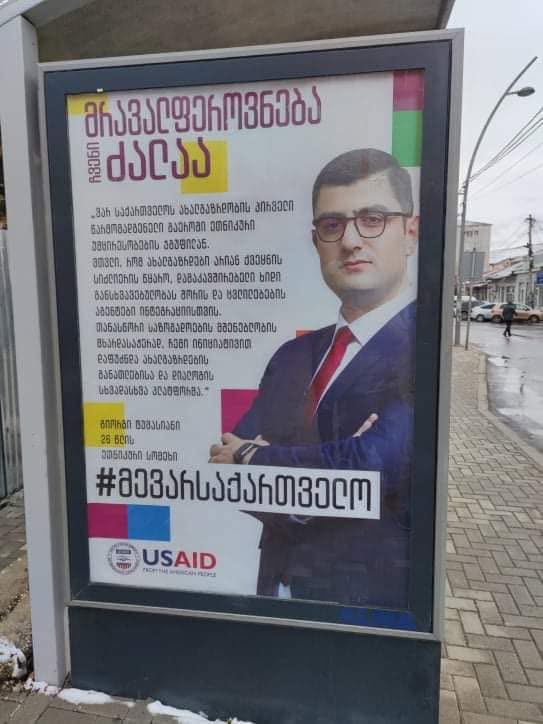
In January 2021, a year after my inclusion in the Ombudsman’s publication, my work also received international recognition. The United States Agency for International Development (USAID) selected me as one of the faces of the nationwide ‘Unity in Diversity’ campaign in Georgia.
The world around us continued its headlong descent into hell. In September 2022 came Azerbaijan’s direct attack on the sovereign territory of Armenia itself. The former architecture of collective security—the CSTO and the bilateral agreements with Russia—demonstrated its practical incapacity. Guided solely by their own interests, traditional partners preferred to remain observers of the attempts to dismember the Armenian state.
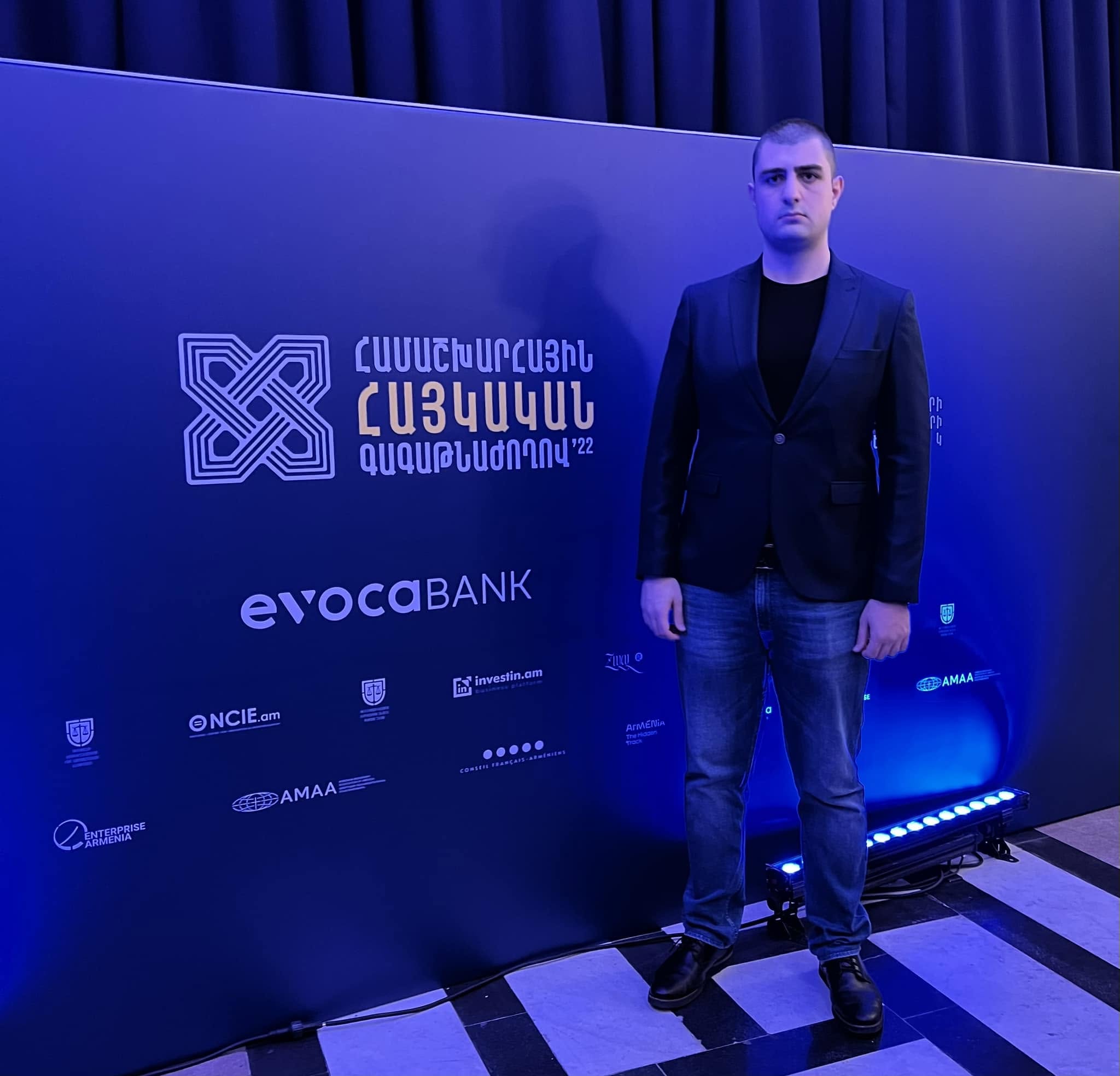
In October 2022, in the fresh aftermath of this systemic shock, I was invited to Yerevan to represent Georgia’s Armenian community at the first Global Armenian Summit. My focus was intensely pragmatic: decipher the contours of the disaster and determine what we would do next. I came with a concrete tactical solution, which I was able to convey personally in a conversation with Armenian Foreign Minister Ararat Mirzoyan.
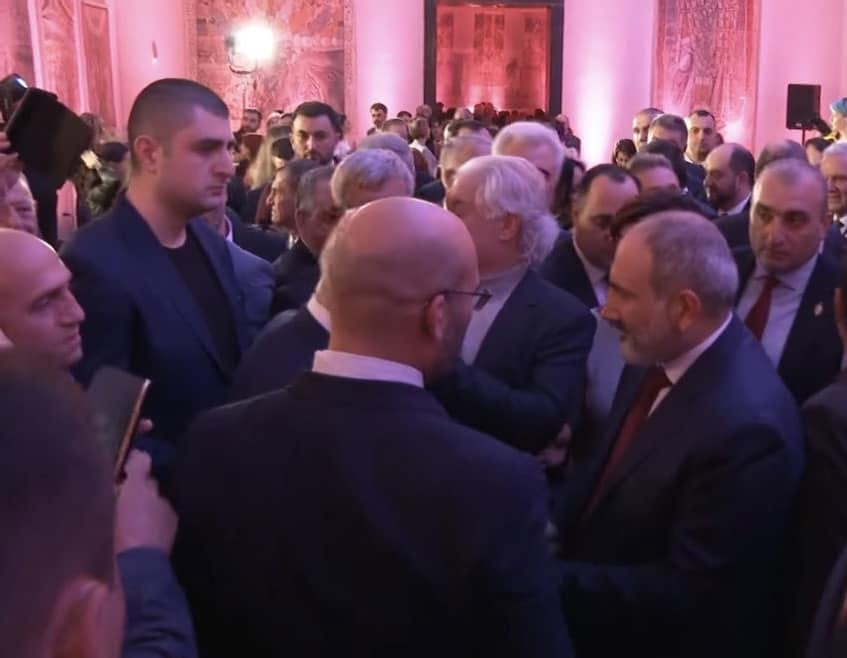
I called on the Armenian authorities to make full use of the experience of Sakartvelo/Georgia, where the EU Monitoring Mission had been operating since 2008, and to secure the continued presence of European civilian monitors on the Armenian side of the border with Azerbaijan. At that point, since 20 October 2022, a temporary EU monitoring capacity was already operating in Armenia, staffed by specialists seconded from the mission based in Georgia. My conviction was that this instrument had to be strengthened and made long-term: monitors are no guarantee of military protection, but they can help reduce tensions, document the situation on the ground, and increase international awareness. On 23 January 2023, the EU Council established a separate civilian mission in Armenia, EUMA, which began its work on 20 February.
While Armenia sought to strengthen new security instruments, the systemic crisis in Georgia was rapidly deepening. State mechanisms were moving ever faster towards a rigid concentration of power and away from the European path of development.
In March 2023, that crisis brought us back onto the streets of Tbilisi. This time, the immediate cause was the introduction of the ‘foreign agents’ bill. Extensive external pressure from Russia and the authorities’ attempts to impose authoritarian laws on society were destabilising the country’s foreign and domestic political course. After the confrontation of 2019, Georgia’s independence and civil liberties were again facing the gravest test. We took to the streets once more, understanding clearly that the ring of anti-democratic forces about which I had warned Merkel in 2018 was tightening around the entire South Caucasus. Under the pressure of civic resistance, the authorities withdrew the bill. In my assessment, it was a tactical retreat: the system had merely paused.
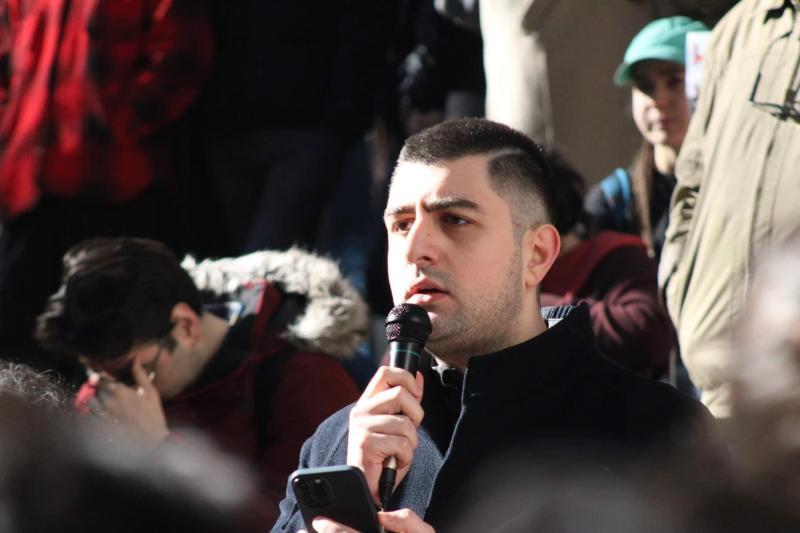
In Defence of Georgia’s Euro-Atlantic and Democracy Choice, March 7, 2023 — More
That outcome showed me the real strength of civic resistance: a united society could force the authorities to step back from a specific action. But the withdrawal of the bill had not yet changed the political mechanisms that had produced the initiative. Stopping one decision and preventing the same danger from returning were different tasks.
That same spring of 2023, my admission to the educational programme of the Leadership Academy for Development at Stanford University’s Center on Democracy, Development and the Rule of Law gave me new tools with which to analyse this experience. Later, I also joined Stanford University’s ‘Leadership Network for Change’. The conceptual framework I gained through working with Francis Fukuyama and other political thinkers allowed me to formulate more precisely the questions I encountered in state and community work and in civic struggle.
In September 2023 came the forced displacement of Karabakh’s entire Armenian population. Following the 2022 attack on Armenia’s sovereign territory, this new disaster once again confronted us with the question of preserving Armenian statehood in its starkest form: as a matter of security and physical survival. A century later, the history of my ancestors, the Tumasyans and the Mazmanyans, repeated itself with frightening mathematical precision.
Our nation is once again leaving its home to the whistle of bullets, because peacekeepers, allies, statements, treaties and declarations, international organisations and institutions proved utterly powerless before technologically organised military force.
For me, this was no matter of watching geopolitics from the sidelines. The family memory of my ancestor, Colonel Hovhannes Mazmanyan, commander of the Kars Regiment, who in October 1920 chose death rather than surrender the citadel, came alive again with a new, painful force. The story of Kars was no longer merely a distant past: our generation was once again facing the same threats.
These events sharpened the questions that became the core of this book: why are some peoples able to recover after disasters, while others remain captive to their own defeats for decades? Why do some states learn from tragedies and become strong, while others continue blindly to reproduce the same historical mistakes?
In the autumn of 2023, in those very black days when the final tragic stage of the geopolitical catastrophe and the mass exodus of our people were unfolding in Karabakh, the blow also reached my family. My father became gravely ill. The entire year that followed turned into an unceasing, exhausting struggle on three fronts: to save my father, to save Georgia, and to save Armenia.
Having passed through these years of blows, internal betrayals, tear gas, and national disasters, I reconsidered my earlier understanding and clarified the path ahead. Every illusion had burned away down to the bedrock. I saw the international and regional system laid bare, cynical and merciless. From those very ashes came a hard realisation: we no longer have time for tactical bustle, political manipulation, or cosmetic repairs to the nation’s old, flawed code. Defeat had been programmed into the very matrix of our state and community from the outset. And to defeat the external Bel, we must first destroy Bel within ourselves, down to his foundations.